Storm Rocket A.I. Ball Review:
A Clean Pearl That Keeps You Ahead of the Transition
Bowling.com Pro Staff Posted: November 3, 2026

Quick Summary: Is the Storm Rocket A.I. a first ball or a transition ball? It's a transition ball. This symmetric pearl clears the fronts and makes a clean, controllable move once the lanes open up. It's a great fit for league bowlers who need a step-down from their solid for games two and three.
Quick Links:
Is the Rocket A.I. a first ball or a transition ball?
It's a transition ball. The Storm Rocket A.I. is a clean pearl for medium house shots once the fronts open up. On a fresh pair with real volume, most bowlers see length without enough backend to finish the turn. Once the lanes get crispy, the same ball clears the heads and makes a defined, controllable move.
Thinking about the Storm Rocket A.I.?

| Color | Chrome/Wine |
|---|---|
| Coverstock | A1S Pearl Reactive |
| Core | Booster A.I. Core (14-16#) |
| Finish | Power Edge |
| RG | 2.53 (15# ball) |
| Differential | 0.048 (15# ball) |
| Hook Potential | Medium-High |
| Length | Middle to Late |
| Recommended Lane Condition | Medium |
| Fragrance | Frosted Berry |
| SKU | STBBMVRC |
| Product ID | 16838 |
| Brand | Storm |
| Category | Bowling Balls |
| Ball Performance | Mid-Performance Balls |
| Release Date | May 2026 |
How Does the Rocket A.I. Actually Roll?
The original Rocket from 2015 was a hybrid on the Booster core. The Sky Rocket was the pearl version, R2S Pearl, polished. Both were known for length and control when there was friction. Storm brought the Booster back, lowered the RG a hair and raised the differential with Amplified Inertia outer-core work, and wrapped it in the A1S Pearl cover we've already seen on the Equinox and the Hy-Road 40.
At 15 lb you're looking at an RG of 2.53 and a differential of .048. No mass bias. That's a medium RG, medium-high flare symmetric. The polish and the pearl additive keep it clean through the heads. The core gives it enough flare to make a real move at the breakpoint instead of just skidding past the pocket.
On a fresh medium house shot, a lot of people see the same thing : clean fronts, not quite enough backend to finish the turn. Once the lanes get crispy, the motion changes. It still clears the fronts, then makes an angular but controllable move. Stronger balls overhook or roll out. The Rocket A.I. lets you move right and stay with it.
On a 44-foot house shot test, it proved to be long and smooth, with good energy into the pins even on shots that looked light. Testers have said it sometimes looks like it won't pick up in transition, then it moves just enough. Strokers stay close to the friction and seem to never get a hard snappy reaction off the dry. The controllability has been compared to an IQ Tour AI, but with more length and a less strong arc. Long and smooth beat long and snappy for staying on top of friction.
A tweener ball tester on a fresh medium pattern at box finish found he could play straighter angles and still get a stronger move off the end of the pattern than the Hy-Road 40. Lower-rev bowlers could play straighter on the fresh. Opening the lane and standing left waits until more friction shows up in the track.
Several bowlers put it in the middle of the bag. A good piece between stronger symmetricals and the Roads. The A.I. core makes it roll a bit earlier than some expect. That's the trade. You get more dynamic downlane motion than the old Booster, and you give up a little of the pure skid the old Sky Rocket had.
Belmo's own description matches what testers have seen. Clean through the fronts and midlane. Rounded, controllable downlane. You can play a little in the dirt with it. Not a hockey-stick pearl.
| Rocket A.I. | Hy-Road 40 | IQ Tour AI | Equinox Hybrid | |
|---|---|---|---|---|
| Cover | A1S Pearl | A1S Pearl | R2S Pearl | A2S Hybrid |
| Core | Booster A.I. (sym) | Inverted Fe2 (sym) | C3 Centripetal (sym) | Solarion A.I. (asym) |
| Box finish | Power Edge | Power Edge | 1500 polished | Power Edge |
| Read | Mid-late, clean | Later, cleaner | Mid, more continuous | Mid, stronger traction |
| Backend | Defined, controllable | Angular, stores energy | Strong arc | Continuous drive |
| Best use | Transition to burn, medium house | When you need more length | Benchmark control, more oil | Fresh to early transition |
You'll know in two shots if it's matched up. A good look is the ball clearing the first half of the lane, making a defined move at the breakpoint, and still driving the 5-pin. A bad look is a ball that never finishes the turn on the fresh, or one that jumps left the second you miss outside once the pair is crispy. If you have to stand next to the channel just to create motion, the pair is still too oily for this cover.
Who Should Buy the Rocket A.I.?
Grab this ball if you:
- Need a clean pearl for games two and three once your solid starts to quit
- Bowl a typical house shot and want something that stays controllable near the friction
- Liked the old Sky Rocket or Rocket and want the same idea with a modern cover and a little more downlane motion
- Want a readable symmetric instead of an asym that changes shape with every miss
- Play with moderate revs and can get the ball to friction without forcing it
It also works as the step-down from an Equinox Hybrid or another mid-performance hybrid when the fronts open up.
Who Should Skip the Rocket A.I.?
You might want a different ball if you:
- Need a first ball on fresh medium-heavy or heavy oil. The backend isn't there yet for a lot of people
- Want the late, sharp snap of a high-end pearl on a burnt pair
- Already own a Hy-Road 40 or another A1S Pearl and don't need another clean piece
- Bowl mostly sport patterns with volume. This cover wants friction
- Are looking for a one-ball answer. It has a window. It's a useful window. It's not the only ball you need
Pros & Cons (Straight Talk for Bowlers)
Pros
- Clean through the fronts with a defined, controllable backend
- Shines in transition when stronger balls overhook or roll out
- Symmetric and readable, so the shape repeats
- Good carry even on imperfect hits once it's matched up
- Lower price point than most high-performance pearls
Cons
- Not enough ball on a fresh, higher-volume house shot for a lot of bowlers
- Can overreact once the pair is truly burnt if you stay right
- A.I. core makes it a touch earlier than the old Sky Rocket for some
- Same A1S Pearl cover as the Hy-Road 40, so the shapes can overlap
- Not a benchmark for sport or heavy oil
Key Buying, Maintenance & Drilling Tip
Leave the Power Edge finish alone until the ball tells you otherwise. That polish is half the reason it gets down the lane on a transitioning pair. If it's still skating after the fronts open, a light scuff or a fresh 2000 gets you more midlane read without turning it into a solid. Don't jump straight to 500. If it starts jumping once the pair is crispy, a fresh Power Edge or a light compound brings the length back.
Wipe it every shot. A dirty pearl looks earlier and weaker than the ball you bought. Clean it after the set so the next league session starts with the length you paid for.
Early layouts have lived in a normal symmetric range: 4.5 x 45, 5 x 50, 4 x 4.5 x 1.75, and stronger pin-down looks around 4.5 x 3.5 x 1.5. Pin-up shows more of the downlane move. Pin-down tames it if you already hook a lot near the friction. Talk to your pro shop about the clean pearl or hybrid you already throw so this one doesn't land on top of it.
Weights run 12–16 lb. The Booster A.I. numbers most shops quote are for 14–16. At 12 and 13 the differential drops, the way most cores do. Don't assume the 15 lb motion if you throw a lighter ball.
Final Verdict: Should You Buy the Rocket A.I.?
Yes... if your bag is missing a clean, readable pearl for games two and three. The original Rocket name was about length and control when there was friction. The A.I. version keeps that job and adds a little more downlane motion without turning into a jumpy flip ball. Testers who've stayed with it through transition kept scoring. Bowlers who've tried it on the fresh and expected it to finish the turn usually put it back in the bag.
It won't replace an Equinox Hybrid or a solid for game one. It won't replace a high-end pearl when you need maximum angle on a burnt pair. For a league set that starts medium and gets crispy, or a tournament block where you need to move right and still carry, it's the piece that keeps you ahead of the change.
Ready to add it? Check out the Storm Rocket A.I. at Bowling.com and get it drilled to fit your game.
Storm Rocket A.I. Frequently Asked Questions
Q: What should I know about the Storm Rocket A.I.?
A: It’s a mid-performance symmetric pearl released in May 2026. Booster A.I. core, A1S Pearl cover, Power Edge finish. At 15 lb the numbers are RG 2.53 and differential 0.048. Storm built it as a clean transition ball for medium house shots once the fronts open up.Q: Is the Rocket A.I. a first-ball or a transition ball?
A: It’s a transition ball. On a fresh pair with real volume most bowlers see length without enough backend to finish the turn. Once the lanes get crispy it clears the heads and makes a defined, controllable move.Q: Who should buy the Storm Rocket A.I.?
A: League bowlers who need a clean pearl for games two and three once their solid starts to quit. It fits players who want a readable symmetric instead of an asym, and anyone who liked the old Rocket or Sky Rocket and wants the same idea with a modern cover.Q: How does the Rocket A.I. compare to the Hy-Road 40 and IQ Tour AI?
A: Same A1S Pearl cover as the Hy-Road 40, but the Rocket A.I. reads a little earlier and is less angular. Compared with the IQ Tour AI it has more length and a less continuous arc. It’s the cleaner step-down when stronger balls start to overhook.Q: What are the pros and cons of the Rocket A.I.?
A: Pros: clean through the fronts, defined but controllable backend, shines in transition, readable symmetric motion, good carry once matched up. Cons: not enough ball on a fresh higher-volume house shot, can overreact once the pair is truly burnt, and it overlaps with other A1S Pearls like the Hy-Road 40.Need more info on bowling balls? Search all of our bowling ball articles above.
More Recent Ball Reviews Articles
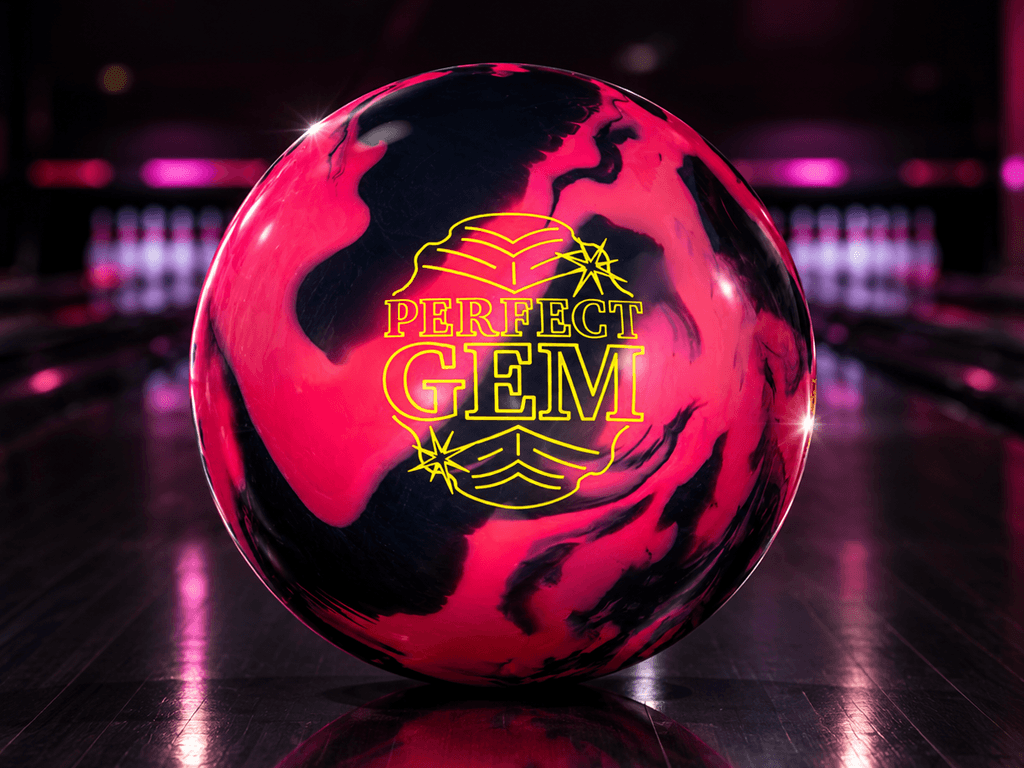
Roto Grip Perfect Gem Ball Review: The Cleaner Gem That Still Hits
The Roto Grip Perfect Gem is the most usable Gem in the line. It keeps the strong, early Gem roll bowlers already trust, gets through the heads a little cleaner than the original, and still drives through the pins once the pair starts to open up. Read the review to find out if this gem is perfect for you!
Read ArticleStorm Equinox Hybrid Ball Review: The Balanced Equinox You Can Stay With When the Lanes Start to Change
You know the night. Game one, the pearl big ball skates and leaves a flat 10. You switch to the sanded solid, strike twice, then watch it jump left in the fifth frame. The Storm Equinox Hybrid is the piece built for that gap: same Solarion core as the rest of the Equinox line, with an A2S Hybrid cover that reads the midlane sooner than the pearl and stays calmer than the solid once the pair opens up. If your league shot is a typical medium house pattern and your current high-performance ball is either too clean on the fresh or too strong by the middle of game two, this is the Equinox worth putting in your hand first. Pre-order the Storm Equinox Hybrid at Bowling.com. It ships September 4.
Read Article