Question: What factors determine a bowling ball's hook potential?
Answer:
The main factors are the coverstock type (solid, pearl, or hybrid), core design (symmetrical vs asymmetrical, RG, and differential), and surface finish (grit level). Aggressive solid coverstocks and asymmetrical cores with high differential create higher hook potential. Pearl coverstocks and polished surfaces usually produce lower overall hook but sharper backend motion. Bowler style (rev rate and speed) also plays a big role in how much hook you actually get from any ball.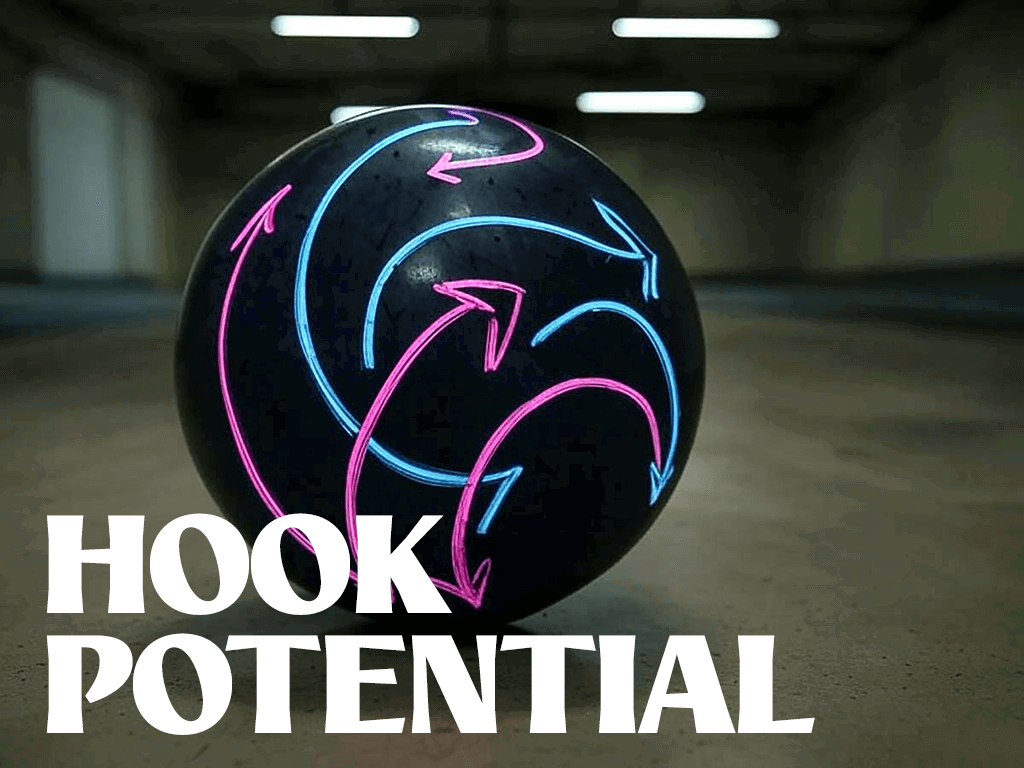
Go Deeper With This Related Article
Hook potential is how much a bowling ball can curve on its way to the pins, its ability to grip the lane, change direction, and hit the pocket at an angle that carries. Coverstock, core, and surface finish set how much hook you get and when it happens. High-hook balls belong on heavier oil; lower-hook balls belong on drier lanes. The number on the box is only a starting point. The hook you actually see depends on your speed, rev rate, and the oil in front of you.
Read Article