Heavy Oil Showdown:
Jackal Ghost V2 vs Combat Solid vs Wicked Gremlin
Bowling.com Pro Staff Posted: September 2, 2026
Updated: October 17, 2026

Quick Summary: A practical comparison of three August 2026 heavy-oil releases — the Motiv Jackal Ghost V2, Brunswick Combat Solid, and Roto Grip Wicked Gremlin. Same problem, three different shapes. Specs, hook and reaction, who each ball actually fits, and how to decide which one belongs in the bag.
Heavy oil is simple until it's not. Either the ball never picks up and you push the pocket all night, or it picks up at 35 feet and you're already walking left in the fourth frame. It's September now, so we're taking a look back at the last month, one that handed us three new solids aimed at that problem. Motiv updated a ten-year benchmark. Brunswick put HK22C² on the Combat core and called it their biggest hook since the Mesmerize. Roto Grip wrapped the Gremlin’s maxed-out core in a sanded solid instead of a pearl.
They're all big on hook, but they're not three versions of the same ball. One rolls early and stays in an arc. One bites sooner and turns harder. One has more length than the other two and keeps driving instead of snapping. “Best” is the wrong question. The useful question is which motion your bag is missing.
| Motiv Jackal Ghost V2 | Brunswick Combat Solid | Roto Grip Wicked Gremlin | |
|---|---|---|---|
| Cover | Leverage HFS Solid | HK22C² Alpha Premier Solid | G-R1 Solid |
| Core | Predator V2 (asym) | Rampart (asym) | Rondure MaxD (asym) |
| Box finish | 3000 LSS | 500/1500 Siaair | 2000 Abralon |
| 15 lb numbers | RG 2.47 / diff .054 / MB .015 | RG 2.502 / diff .051 / MB .019 | RG 2.50 / diff .058 / MB .010 |
| Read | Early midlane, continuous | Earliest of the three | Later than the Combat, earlier than the original pearl Gremlin |
| Hook shape | Strong, smooth arc | Smooth hard turn, more defined move | Strong midlane, continuous finish — not a flip ball |
| Backend | Continuation through the pins | Powerful, continuous drive | Responsive but rounded |
| Best night | Heavy oil you have to live on for a block | Fresh heavy volume, or you need the ball to change direction sooner | Medium-heavy to heavy when a duller solid is too early |
| Watch-out | Can be more ball than a burnt house shot wants | The 500/1500 surface will use up a dry backend | High-rev players on a tight house shot can still get left |
Same job, three speeds. The Combat is the dullest and has the highest intermediate differential, so it's the first to pick up and the most willing to make a move. The Ghost V2 is the low-RG workhorse: it revs early and just keeps rolling. The Wicked Gremlin has the highest total differential and the lowest mass bias, plus a 2000 finish instead of 500/1500, so it gets down the lane a little farther and stays smoother off the spot.
Motiv Jackal Ghost V2: The Heavy-Oil Benchmark
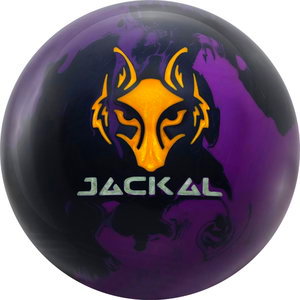 The original Jackal Ghost lasted almost a decade because the Predator V2 core did one thing well. Low RG. Big differential. Early roll. A fat, continuous arc that didn't die at the pins. Motiv left that core alone. The V2 change is the cover. The V2 uses the Leverage HFS, a high-friction solid built for the oil volumes people actually see in 2026, finished at 3000 LSS.
That 3000 grit matters. It's not a 500-grit sanded monster. The ball still sets up in the oil, but it keeps enough energy to finish through the deck instead of standing up at 40 feet and fading. Testers who lived with the original Ghost keep saying the same thing about this one. This ball is earlier and stronger through the midlane with the same shape they already trusted.
It's the safest “one heavy-oil ball” of the three if your schedule is sport patterns, fresh challenge shots, and the occasional over-oiled house pair. Two-handers and higher-rev players get the early roll without the ball quitting when the pattern starts to move. Speed-dominant players get help they can't create with a polished pearl.
Shop the Jackal Ghost V2 if that continuous arc is the missing piece.
| Color | Dark Purple/Purple/Black Solid |
|---|---|
| Coverstock | Leverage High Friction Solid (HFS) Reactive |
| Core | Predator V2 |
| Finish | 3000 Grit Laser Scan Sanded |
| Reaction | Strong mid-lane motion with continuation through pins |
| Hook Potential | High |
| Length | Middle |
| Recommended Lane Condition | Heavy Oil |
| RG | 2.47 (15# ball) |
| Differential | 0.054 (15# ball) |
| Mass Bias Diff | 0.015 (15# ball) |
| SKU | TLMTVBJKGV2 |
| Product ID | 17081 |
| Brand | Motiv |
| Category | Bowling Balls |
| Ball Performance | High-Performance Balls |
| Release Date | August 2026 |
Brunswick Combat Solid: The Earliest, Strongest Turn
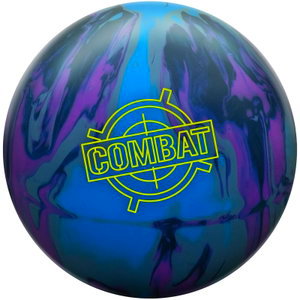 Brunswick isn't being quiet about this one. The Combat Solid is the biggest-hooking ball they've built since the Mesmerize. Same Rampart asymmetric core as the rest of the Combat line. New HK22C² Alpha Premier Solid cover at 500/1500 Siaair. At 15 lb the numbers are RG 2.502, differential .051, and a .019 intermediate diff, the highest mass bias in this trio.
That combination is why the shape keeps getting called a smooth hard turn. It's not a jerky snap. It reads early, blends the wet/dry, and then drives through the pocket with a defined move. If your problem on heavy oil is that the ball gets to the breakpoint still standing up, this is the one built to change direction before the backends take over.
Speed-dominant players should look here first. The dull surface and the higher intermediate differential give you axis migration and traction you don't have to manufacture with your hand. Higher-rev players can still throw it, but they'll be playing deeper, sooner, than they would with the Ghost V2 or the Gremlin.
Leave the 500/1500 box finish alone on the fresh. If the pair is already used, 2000 or a light polish is the first adjustment, not a different ball.
| Color | Navy/Blue/Slate/Purple |
|---|---|
| Core | Rampart (14-16#) |
| Core Type | Asymmetrical |
| Finish | 500, 1500 Siaair Micro Pad |
| RG | 2.502 (15#) |
| Differential | 0.051 (15#) |
| Mass Bias Diff | 0.019 (15#) |
| Hook Potential | High |
| Length | Early |
| Recommended Lane Condition | Heavy Oil |
| Warranty | 2-Year Limited Manufacturers Warranty |
| Coverstock | HK22C² - Alpha Premier Solid Reactive |
| SKU | BRU60108683 |
| Product ID | 17019 |
| Brand | Brunswick |
| Category | Bowling Balls |
| Ball Performance | High-Performance Balls |
| Release Date | August 2026 |
Roto Grip Wicked Gremlin: More Length Than the Other Two Solids
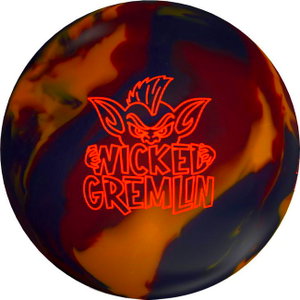 The original Gremlin was a pearl. Clean fronts. Angular snap. The Wicked Gremlin keeps the same Rondure MaxD core (highest RG and highest differential that shape has carried) and puts a G-R1 solid on it at 2000 Abralon.
That's the opposite of a flip upgrade. Roto Grip’s own comparison is blunt. It has more midlane traction than the pearl, a smoother transition, and a more predictable, continuous read through the pins. Testers who've thrown both say the Wicked picks up about five feet sooner than the original and loses the hockey-stick move. Some have it stronger than an Alpha Crux remake through the backends once those start to slow down. Others on older wood or a tight 41-foot house shot say it wants to start hooking at 30 to 35 feet if you stay right.
So this isn't the “angle play” of the three. It's the heavy-oil Gremlin that can live on a fresh house shot and a medium-heavy tournament pair without the pearl’s late jump. The .010 mass bias is the lowest of the group, which is why the move stays rounded instead of violent.
If your current big asym is already too early, and a 500-grit solid would only make that worse, the Wicked Gremlin is the one that still gives you hook without asking you to stand in the same footprints as the Combat.
| Color | Citrine/Red/Purple |
|---|---|
| Coverstock | G-R1 Solid Reactive |
| Finish | 2000-Grit Abralon |
| Flare Potential | High |
| Reaction | Strong Mid-Lane Traction with Continuous Backend |
| Recommended Lane Condition | Medium to Heavy Oil |
| RG | 2.50 (for 15# ball) |
| Differential | 0.058 (for 15# ball) |
| Mass Bias Diff | 0.010 (15# ball) |
| Core | Rondure MaxD Core (14-16#) |
| SKU | RGBBMRWG |
| Product ID | 17016 |
| Brand | Roto Grip |
| Category | Bowling Balls |
| Ball Performance | Upper Mid-Performance Balls |
| Release Date | August 2026 |
Which one should you actually buy?
Start with the miss you already have.
If you need the ball to roll earlier and just keep going, get the Ghost V2. That's the benchmark shape, and the 3000 finish is the reason you can stay with it after game one.
If you need the ball to hook more, and hook sooner, because your speed beats your revs, grab the Combat Solid. Dull surface, highest mass bias, strongest defined turn.
And if you need heavy-oil traction that isn't as early as a 500/1500 solid, add the Wicked Gremlin to your bag. It's the same family as the pearl Gremlin, with the snap taken out and the midlane put back in.
You don't need all three. Two of them will cover almost the same night and fight each other in the bag. If you already own a sanded high-mass-bias asym, skip the Combat and look at the Ghost or the Gremlin. If you already own a 3000-grit heavy-oil benchmark, the Combat is the step up in surface and the Gremlin is the step sideways in shape.
Skip all three if you bowl on light or burnt house shots most weeks. These covers were built to eat oil. On a pair that's already been through two leagues, a mid-performance hybrid or a polished pearl will score more than any of these.
All three of these new balls are asymmetric. PSA placement isn't a footnote. A pin-down layout tames the Combat. A longer pin-to-PAP on the Gremlin keeps the .058 differential from flaring into a roll-out. Talk to your pro shop about the strong pieces you already throw so the new one doesn't land on top of them.
A two-shot way to tell if you picked right
A good heavy-oil look is the ball picking up in the midlane, staying on the arc you started, and rolling into the 5-pin. Corner pins that kick means it still has energy. A 5-pin that just sits there means it used itself up too soon.
If the Ghost V2 never comes back, you needed more surface or a duller ball. If the Combat is standing you up in the fourth frame, you needed the Gremlin’s length or the Ghost’s 3000 grit. If the Wicked Gremlin is already left of where you wanted to be on a fresh house shot, you needed to play deeper, or you needed a cleaner ball than any of these three.
Heavy Oil Balls Frequently Asked Questions
Q: What balls are compared in the September 2026 heavy oil showdown?
A: The article compares three August 2026 solid releases built for heavy oil: the Motiv Jackal Ghost V2, the Brunswick Combat Solid, and the Roto Grip Wicked Gremlin. All three are asymmetric solids, but they hook at different times and with different shapes.Q: Which of the three balls hooks the earliest?
A: The Brunswick Combat Solid is the earliest and most defined of the three. It uses an HK22C² Alpha Premier Solid cover at a 500/1500 Siaair finish and has the highest mass bias in the group, so it picks up soonest and makes a smoother hard turn.Q: How do I choose between the Ghost V2, Combat Solid, and Wicked Gremlin?
A: Pick the Ghost V2 if you want an early, continuous arc that keeps rolling through the pins. Pick the Combat Solid if you need more hook sooner, especially if you are speed-dominant. Pick the Wicked Gremlin if you want heavy-oil traction with more length than a 500/1500 solid and a rounded finish instead of a snap.Q: Do I need all three of these heavy oil balls?
A: No. Two of them will cover almost the same night and fight each other in the bag. If you already own a sanded high-mass-bias asymmetric, skip the Combat. If you already own a 3000-grit heavy-oil benchmark, the Combat is the step up in surface and the Gremlin is the step sideways in shape.Q: Who should skip these three balls?
A: Skip all three if you mostly bowl on light or burnt house shots. These covers were built to eat oil. On a pair that has already been through two leagues, a mid-performance hybrid or a polished pearl will usually score better than any of these solids.Need more info on bowling balls? Search all of our bowling ball articles above.
More Recent Bowling Balls Articles
Roto Grip Perfect Gem Ball Review: The Cleaner Gem That Still Hits
The Roto Grip Perfect Gem is the most usable Gem in the line. It keeps the strong, early Gem roll bowlers already trust, gets through the heads a little cleaner than the original, and still drives through the pins once the pair starts to open up. Read the review to find out if this gem is perfect for you!
Read ArticleHow to Choose a Spare Ball: Plastic vs Clear vs Urethane
This guide walks through every spare-ball option, from basic plastic and Viz-A-Balls to clear covers, plastic with cores, hard urethane, and low-end reactive, so you can match the ball to your style and the conditions you actually bowl.
Read Article