What is a fingertip grip and why should I use it?
Bowling.com Pro Staff Posted: March 24, 2026
Last Updated: September 21, 2026

Quick Summary: With a fingertip grip, your middle and ring fingers only insert up to the first knuckle, while your thumb still goes all the way in. It allows you to generate the controlled rotation needed for a strong, predictable hook that enters the pocket at an angle and turns weak hits into strikes. Learn how to drill a new reactive ball for a fingertip grip, and how to throw it.
Quick Links:
If you’re ready to hook the ball more consistently and raise your scores, one of the single biggest upgrades most bowlers make is switching from a conventional grip to a fingertip grip. Here’s exactly what that means, how it compares to the grip you already know, and why it can dramatically improve your game, especially when you buy your own reactive bowling ball.
Conventional Bowling Grip (the one you use on a house ball)
Your middle and ring fingers slide in all the way to the second knuckle. Your thumb goes fully in. It feels very secure and is easy to control, which is why rental balls and beginner equipment use this style. Great for straight shots or picking up spares, but it limits how much you can rotate the ball at release.
Fingertip Bowling Grip (the one most competitive bowlers use)
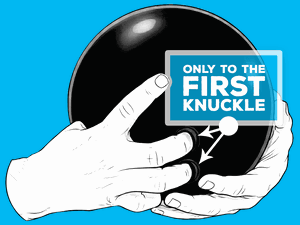 Your middle and ring fingers only insert up to the first knuckle, while your thumb still goes all the way in. This longer span between thumb and fingers allows the ball to sit more on your fingertips instead of deeper in your hand. At release, your thumb exits first, giving your fingers the freedom to lift and rotate the ball with significantly more power, revs, and spin. It also puts far less strain on your fingers, making it more comfortable for longer sessions and helping you maintain a consistent release.
Why Choose Fingertip Over Conventional Grip?
More hook and revs
You can generate the controlled rotation needed for a strong, predictable hook that enters the pocket at an angle.
Better pin carry
The extra revs and angle turn weak hits into strikes.
Modern balls love it
Reactive resin coverstocks react much more strongly with a fingertip grip, giving you the backend motion house balls can’t deliver.
Long-term comfort
Once fitted properly, most bowlers find it puts less strain on their hand than gripping a conventional ball tightly for hours.
Use conventional if you’re brand-new to bowling or just throwing straight spares. Switch to fingertip the moment you want to develop a real hook and improve your average.
How a Ball Is Drilled for Fingertip Grip
Take your new ball to a pro shop (or use our recommended partners when you buy online). The driller will:
- Measure your hand for the correct span (longer than conventional).
- Drill the finger holes shallower so they stop at your first knuckle.
- Position the holes in a slightly more triangular layout.
- Install soft finger inserts (removable grips) for comfort and a consistent feel even when your fingers swell.
- Add a removable thumb insert (or “slug”) so the thumb hole fits perfectly and can be swapped between balls.
A precise fitting is everything because poorly drilled fingertip holes cause blisters or inconsistent release. A good pro shop will let you test the grip before they finish the job.
Ready to Upgrade?
If you’re still using house balls and struggling to hook, buying your own reactive ball with a proper fingertip grip is one of the smartest moves you can make. You’ll immediately feel more control, more revs, and more strikes.
Stop by your local pro shop for a free fitting, then browse our selection of reactive bowling balls perfect for a fingertip grip. Once you throw your first game with a correctly drilled fingertip ball, you’ll never want to go back!
Fingertip Bowling Grip Frequently Asked Questions
Q: What is a fingertip grip in bowling?
A: A fingertip grip means inserting your middle and ring fingers into the ball only up to the first knuckle, while your thumb goes all the way in. This creates a longer span so the ball rests more on your fingertips. It allows your thumb to exit first at release, giving your fingers more room to lift and rotate the ball for increased revs and hook.Q: What’s the difference between a fingertip grip and a conventional grip?
A: In a conventional grip (common on house balls), your middle and ring fingers go in up to the second knuckle for a more secure feel and easier control. A fingertip grip uses a shallower insertion (first knuckle only) and a longer span, which provides much greater rotation and hook potential. Conventional is better for straight shots and beginners, while fingertip is preferred for developing a strong hook with reactive balls.Q: Why should I switch to a fingertip grip?
A: Switching to a fingertip grip lets you generate more revs, create a stronger hook, and get better pin carry through increased entry angle. It also reduces hand strain during long sessions and pairs perfectly with reactive resin balls for more backend reaction. Most bowlers see a noticeable improvement in scoring once they make the switch with a properly fitted ball.Q: How do I get a fingertip grip drilled on my bowling ball?
A: Take your new reactive bowling ball to a pro shop for a professional fitting. They will measure your hand for a longer span, drill the finger holes shallower (to stop at the first knuckle), and usually install soft removable finger inserts plus a thumb slug. Always test the grip before the final drilling is completed. This ensures comfort, consistency, and prevents blisters or inconsistent release.Q: Is a fingertip grip good for beginners?
A: Fingertip grips are generally not recommended for brand-new bowlers. Most beginners should start with a conventional grip on house balls because it feels more secure and is easier to control for straight shots. Once you’re comfortable and want to learn to hook the ball, transition to a fingertip grip with your own reactive ball for better performance.Need more bowling tips? Search all of our bowling tip articles above.
More Recent Bowling Tips Articles

Ten Things To Do Before Your League Season Begins
The first night of league has a habit of showing you everything you skipped in the off-season. A thumb that hangs. Grips that are slick. A slide sole that grabs. A ball that has not seen a spinner since March. This is the ten-thing checklist we run before week one: fit, equipment, surface, shoes, a little practice, and the boring stuff in the bag you only notice when it is missing. Do it now and you walk in ready. Skip it and you spend night one solving problems instead of bowling.
Read ArticleEntry Angle Is Everything: How Driving the 5 Pin Turns Pocket Hits Into Strikes
Tired of hitting the pocket all night and still leaving corner pins? Check out our full article on entry angle, the measurement that separates pocket hits from strikes. Learn why the 5 pin is your best diagnostic, what the ideal entry window looks like, and how to create more angle with your release and equipment. Read the complete guide here!
Read Article