How to Build a Bowling Ball Arsenal
Bowling.com Pro Staff Posted: December 1, 2025
Updated: October 17, 2026

Quick Summary: Step-by-step guide teaching bowlers how to build an effective, non-overlapping ball arsenal using a 6-category reaction system, with advice tailored to style, level, and budget.
All bowling balls react differently. Some hook early, some hook late, and some barely hook at all. That’s what makes bowling such a unique game—the equipment itself can completely change your scores. In fact, someone throwing the right ball poorly will often score better than someone throwing the wrong ball well.
But here’s the challenge: bowling balls are complicated. There are endless numbers, names, and marketing terms that don’t always tell you what a ball actually does on the lane. Pick at random, and you might end up with two balls that behave almost identically. That’s wasted space in your bag and wasted money. You could also save money by using our guide to building an arsenal for cheap
To simplify the process, we use a 6 ball categorical scale. Every modern reactive ball (excluding urethane and plastic) falls into one of six categories. This system makes it easier to build a bag that covers all conditions without overlap.
Step 1: Know Your Needs
How many categories you need depends on your competition level and style:
- Casual league bowlers (1 night per week): 1–2 balls may be enough.
- Tournament or multi-league bowlers: You’ll want more categories filled to handle different oil patterns.
Next, identify your style:
- Speed-dominant bowlers (higher speed, lower revs): need stronger balls to help the ball hook.
- Rev-dominant bowlers (higher revs, lower speed): need weaker balls to keep the ball from over-hooking.
Finally, consider your budget
If you only buy one ball per year, pick one that matches your lane conditions. Heavy oil? Go stronger. Light oil? Go weaker. And if you want to save money, check out our Cop or Drop guides where I cover the best bowling ball deals to help you save a few dollars.
Step 2: The Six Categories
Here’s how the scale breaks down, with examples of where each fits in your bag:
1. Strong / Smooth
- Reaction: These balls create the earliest and strongest read on the lane, rolling heavy in the oil and transitioning with a slower, more controlled hook.
- Best For: They excel on heavy or difficult oil patterns where control is more important than angle.
- Who Benefits: Speed-dominant bowlers will appreciate how these balls help them get the ball to hook sooner. Tournament bowlers also need a stronger and slow ball in the bag to combat the flatter sport conditions.
- Examples: Storm Ion Max, Brunswick Mesmerize, Motiv Jackal Onyx.
2. Strong / Sharp
- Reaction: Strong overall but with a sharper backend move, these balls dig into oil yet still provide angular motion when they hook.
- Best For: Perfect for house shots or transition phases when you need strength but also want the ball to finish with angle.
- Who Benefits: Bowlers who want one reliable ball for league play often find this category the most versatile. Otherwise, speed dominant bowlers will enjoy asymmetrical pearl balls like this to fight through transition on both easier and harder patterns.
- Examples: 900Global Viking, Hammer Black Widow Mania, Motiv Evoke Hysteria.
3. Medium / Smooth
- Reaction: Benchmark balls give a balanced midlane read with a smooth, predictable arc, making them the most versatile option. They hook later than their Strong/Smooth counterparts, but with a similar downlane motion.
- Best For: They’re generally the first ball out of the bag, used to judge lane conditions and decide whether stronger or weaker equipment is needed.
- Who Benefits: All bowling styles will appreciate the Medium/Smooth category to have a consistent and dependable reaction suited for many different conditions.
- Examples: Roto Grip Rockstar, Hammer Hammerhead, Motiv Primal Ghost.
4. Medium / Sharp
- Reaction: These balls clear the fronts easily and respond with a more angular move at the breakpoint, giving strong continuation.
- Best For: Ideal for transition on medium oil, they adapt well when lanes start to break down. Can also be used for late transition on heavy oil patterns.
- Who Benefits: Bowlers who like to open up the lane and trust the ball to recover will lean on this category. Speed dominant, rev dominant, and balanced bowlers all will find value in this slot.
- Examples: Storm Phaze II Pearl, Columbia 300 Piranha PowerCOR Pear, Motiv Nebula.
5. Weak / Smooth
- Reaction: They hook later than medium/smooth balls but still transition with a slower, controlled shape, keeping angles straighter.
- Best For: Low-oil conditions, wood lanes, or situations where you want control without overreaction. If you enjoy playing straighter but need a weaker option, this category will be your best call.
- Who Benefits: Bowlers who need a ball that stays predictable on dry lanes will find these invaluable.
- Examples: Storm IQ Tour, Ebonite Turbo X, Motiv Max Thrill Red/Blue Solid.
6. Weak / Sharp
- Reaction: These balls skid the longest and make the sharpest backend move, giving maximum angle on the driest conditions. They conserve the ball’s energy best to continue through the pins even with very little oil.
- Best For: Burnt lanes, very low oil, or late games when stronger balls hook too early.
- Who Benefits: Rev-dominant bowlers will rely on these to keep their ball from hooking too soon.
- Examples: Storm Hy-Road 40, Hammer Bubblegum Vibe, Motiv Max Thrill Blue/Yellow Pearl.
Step 3: Fill the Right Categories
- Tournament bowlers: Fill at least 5 categories. Sport and challenge patterns vary so much that you’ll need a ball for every situation. In tournaments, you may bowl on 45 feet of oil, 35 feet of oil, 20 mLs, or 32 mLs. Having a ball for all situations is a necessity to stay in the cut line and make money.
- House shot bowlers: 2–3 categories may be enough. For example, a rev-dominant bowler on a light-oil house shot won’t need a Strong/Smooth ball.
Final Thoughts
Building a bag isn’t about buying the newest release. It’s about covering motion shapes without overlap. The 6 ball categorical scale makes it simple: identify your style, match your competition level, and fill the categories that matter most. Want to see where every new ball fits? Follow our partner, ZVL Bowling, on Facebook, Instagram, and TikTok for updated charts so you don’t waste money on two balls that do the same thing.
Bowling Ball Arsenal Frequently Asked Questions
Q: What is a bowling ball arsenal and why do I need one?
A: A bowling ball arsenal is a collection of balls with different reactions so you can adapt to changing lane conditions. Instead of using one ball for everything, you have options that provide different hook shapes and strengths. This helps you stay consistent on heavy oil, dry lanes, or transitioning conditions and improves your scoring without guessing.Q: How many bowling balls should a beginner have in their arsenal?
A: Beginners and casual league bowlers usually need only 1 to 2 balls. Start with a plastic or urethane spare ball and one versatile reactive benchmark ball (medium/smooth reaction). This setup covers most house shots without overwhelming you. As you bowl more often, you can slowly add balls.Q: What is a benchmark bowling ball and why is it important?
A: A benchmark ball is usually a medium/smooth reactive ball that gives you a consistent, predictable reaction. It helps you read the lane conditions quickly and serves as your go to ball on most house shots. Once you know how your benchmark reacts, you can choose stronger or weaker balls to adjust to heavier or drier parts of the lane.Q: What types of bowling balls should I include in my arsenal?
A: Build your arsenal around six main reaction categories: strong/smooth (heavy oil control), strong/sharp (angular power), medium/smooth (benchmark), medium/sharp (transition), weak/smooth (controlled length), and weak/sharp (dry lane angle). Most bowlers start with a benchmark, a strong ball for oil, and a weaker ball for dry lanes, plus a plastic spare ball.Q: How do I choose bowling balls for different lane conditions?
A: Match the ball to the oil volume and pattern. Use strong/smooth balls on heavy oil for controlled traction. Choose medium/smooth as your benchmark on typical house shots. On medium oil transitions use medium/sharp balls. For dry or burnt lanes use weak/sharp balls for length and angle. Always test your arsenal and adjust based on how the lanes break down during play.Need more info on bowling balls? Search all of our bowling ball articles above.
More Recent Bowling Balls Articles
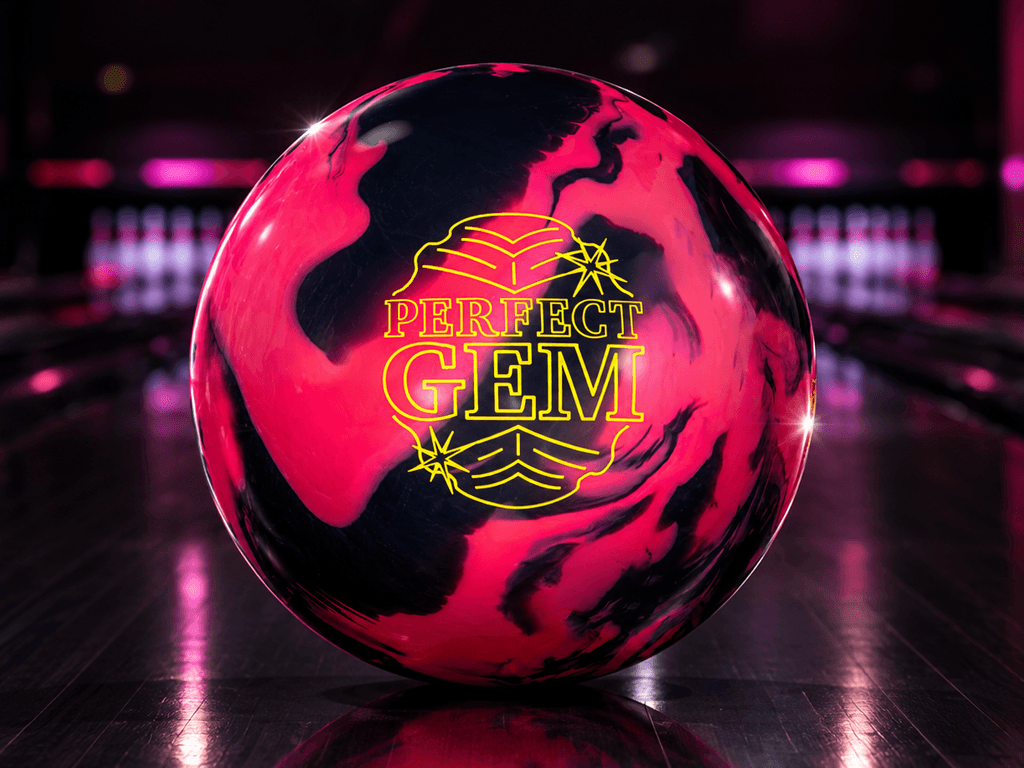
Roto Grip Perfect Gem Ball Review: The Cleaner Gem That Still Hits
The Roto Grip Perfect Gem is the most usable Gem in the line. It keeps the strong, early Gem roll bowlers already trust, gets through the heads a little cleaner than the original, and still drives through the pins once the pair starts to open up. Read the review to find out if this gem is perfect for you!
Read ArticleHow to Choose a Spare Ball: Plastic vs Clear vs Urethane
This guide walks through every spare-ball option, from basic plastic and Viz-A-Balls to clear covers, plastic with cores, hard urethane, and low-end reactive, so you can match the ball to your style and the conditions you actually bowl.
Read Article