










What Bowling Ball Should I Buy as a Beginner or Returning Bowler?
Bowling.com Pro Staff Posted: March 25, 2026
Last Updated: April 24, 2026

Quick Article Summary: Practical guide for new and returning bowlers on choosing their first (or next) bowling ball, including style identification, straight vs. hook decisions, matching ball strength to your game, and recommendations for plastic and entry-level reactive balls.
Need more info on bowling balls? Search all of our bowling ball articles above.
With over 100 bowling balls on the market at any given time, choosing the right one can feel overwhelming. If you’re new to the sport, or returning after time away, it’s not always clear where to start. The goal here is to simplify that process by narrowing your options based on your style, skill level, and ball motion needs.
Our partner, ZVL Bowling shares his TOP Bowling Balls for New and Returning Bowlers for 2026. Zak is a great follow so be sure to subscribe to the ZVL Bowling channel on YouTube!
Step 1: Identify Your Bowling Style
The first step in choosing a bowling ball is understanding how you deliver the ball. Most bowlers fall into one of three categories:
One-handed with thumb
The traditional style. You use one hand throughout the swing with your thumb and fingers in the ball. This is the most common bowling style.
Two-handed (no thumb)
A modern, high-power style. Your off-hand supports the ball during the swing, while your dominant hand uses only two fingers. This generates higher rev rates but requires more body movement.
One-handed (no thumb)
A hybrid approach. You remove the thumb but don’t use your off-hand for support. This can create more rotation but demands strong hand control and strength.
Step 2: No Style Yet? Start Simple
If you’re brand new, you may not know your style yet, and that’s completely fine. Instead, start with a simple question:
Do you want to throw the ball straight or hook it?
If you want to throw it straight:
A plastic (polyester) ball is the best option. These balls are designed to go straight with minimal hook, making them predictable and easy to control. They’re also typically the most affordable.
Common options include:
Top Brunswick TZone Balls
SEE ALL


Top Storm Ice Balls
SEE ALL


Top Motiv Aspire Balls
SEE ALL


If you want to learn to hook the ball:
Start with an entry-level reactive ball. These balls provide controlled hook potential without being overly aggressive, making them ideal for learning fundamentals.
Popular options include:
Top Hammer Raw Series Balls
SEE ALL


Top Storm Tropical Surge Balls
SEE ALL


Top Motiv Ascend Balls
SEE ALL


Step 3: Understand Your Bowler Type
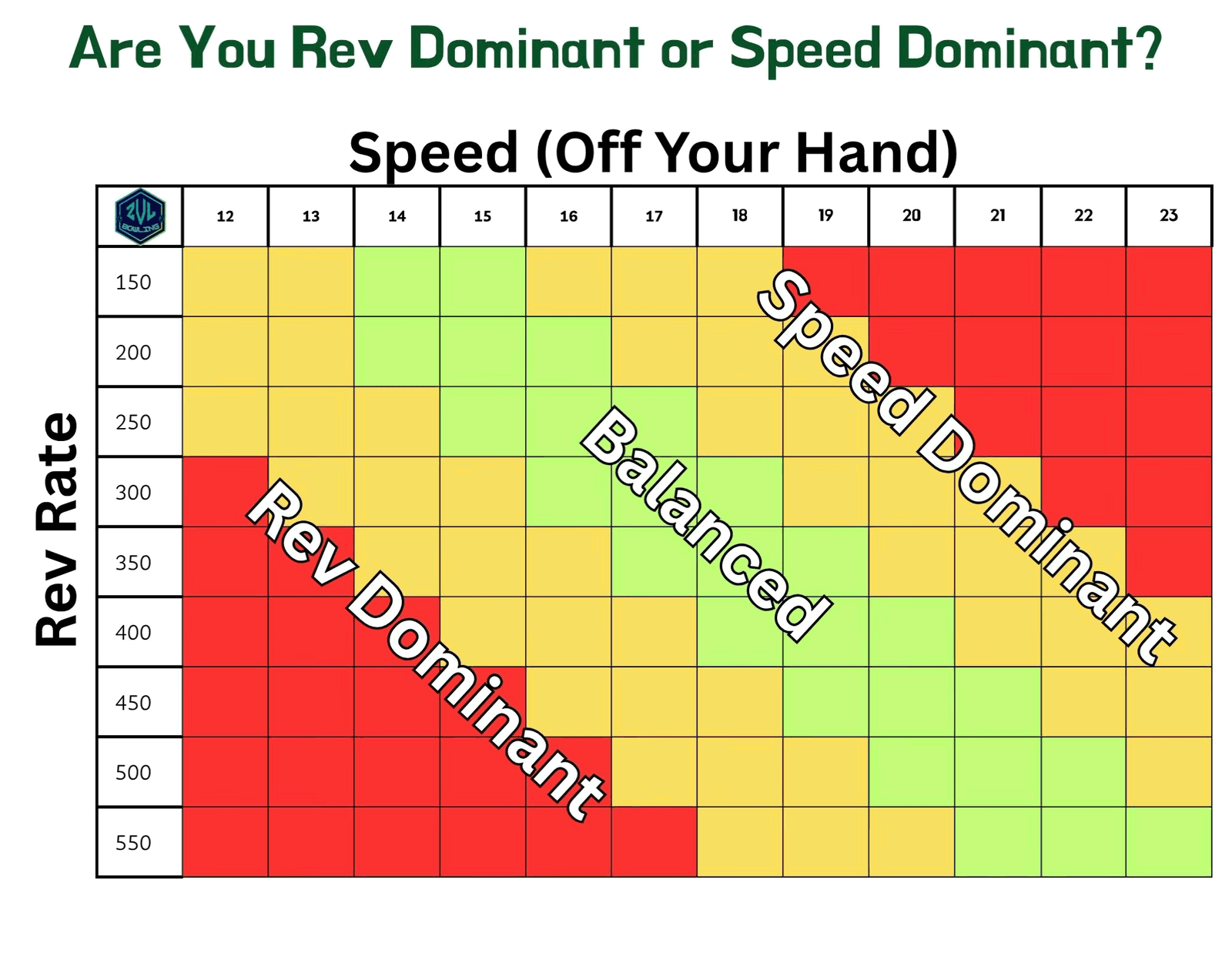
Once you’ve developed a consistent style, or you’re looking for your next ball, you’ll need to understand how your speed and rev rate match up.
Speed Dominant
Your ball speed exceeds your rev rate. These bowlers often struggle to create hook and tend to play straighter angles.
Rev Dominant
Your rev rate exceeds your speed. These bowlers generate hook easily but can struggle with control and overreaction.
Balanced
Your speed and rev rate are relatively matched. This gives you the most versatility in ball choice and lane play.
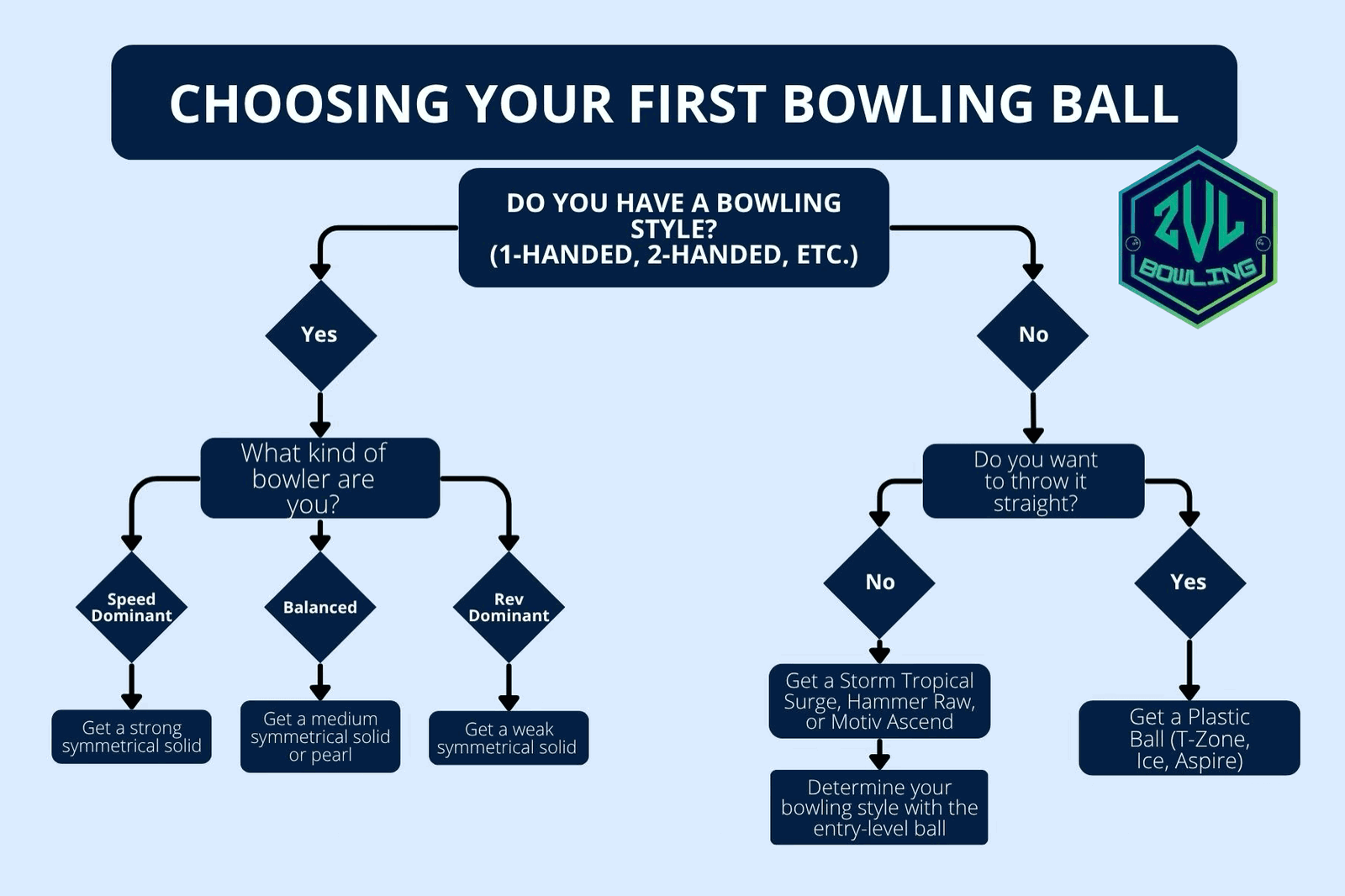
To help determine what kind of bowler you are, use the below chart from ZVLBowling.
Step 4: Match Ball Strength to Your Game
With your bowler type identified, you can now choose equipment that complements your natural tendencies.
Speed Dominant Bowlers
Speed dominant players benefit from stronger equipment to help the ball hook.
Best choice: Strong symmetrical solid
- Earlier traction in oil
- Smooth, controllable motion
Examples:
Rev Dominant Bowlers
Rev dominant players need weaker, smoother equipment to maintain control.
Best choice: Weak symmetrical solid or hybrid
- Gets further downlane
- Avoids sharp, overreactive motion
Examples:
Balanced Bowlers
Balanced players have the most flexibility and can use a wider range of equipment.
Best choice: Medium-strength symmetrical solid or pearl
- Versatile across lane conditions
- Balanced motion between control and backend
Examples:
Final Thoughts
Every bowling ball reacts differently, so the more you understand your game, the better your decisions will be. Use the flow chart as a starting point to identify the right category of ball, then refine your choices based on how your equipment performs.
As you build your arsenal, pay attention to ball motion:
- Hooks too much in league? Add a weaker ball
- Doesn’t hook enough? Add a stronger ball
Over time, filling these gaps in your lineup will improve your consistency, scoring pace, and overall performance.